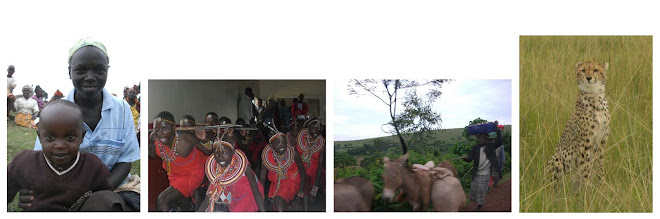
My time here is drawing to a close, and by God's grace I've accomplished more than I had hoped to achieve with this trip.
Ghana Accomplishments:
* Interviewed all teaching staff at KCISS
Purpose: To discover their teaching experience and educational background, their current struggles and their desires for further learning, in order to share with future volunteers so that they can properly prepare for their workshops and training projects
Project: Special Ed Teacher Training (ThWB Special Ed Division)
* Copied Ghana's Special Education Curriculum book
Purpose: To know what the Ghanian government expects teachers to be teaching in special education
Project: Special Ed Teacher Training (ThWB Special Ed Division)
* Copied all students' current files & get their pictures
Purpose: To start ThWB's confidential files on all students/patients served by therapist volunteers which will allow volunteers to prepare for their visit as well as to have a virtual database of therapy, education, and training provided through the past/present/future.
Project: Database (ThWB Special Ed Division)
* Met staff at local hospital and its fledgling "rehab" department
Purpose: Establish official partnership so that when they receive therapist volunteers they know what to expect; also to learn about their hospital so that I can prepare volunteers for their visit.
Project: Service Expansion (ThWB Medical Division)
* Met director of a local NGO, called Project All In Motion, which distributes wheelchairs and other adaptive equipment in addition to facilitating community sensitization and patient re-integration into society
Purpose: Get to know grassroots projects to learn what's been done, their philosophies, projects and support system, and ways ThWB may be able to fulfill needs
Project: Service Expansion (ThWB Wheelchair Provision Division (WPD) & Home Healthcare Division)
* Met director of local NGO, called UNITE, dealing with healthcare and development
Purpose: Get to know grassroots projects
Project: Service Expansion (ThWB Social Welfare Division)
* Identified and profiled several individuals with disabilities, gave initial consultation
Purpose: To find out who are not currently being served and what kind of services they need; to give them hope and some guidance on therapeutic techniques
Project: Database (ThWB Home Healthcare Division)
* Met with directors of 2 other special needs schools in Volta Region
Purpose: To learn how different special education schools are run in the area, their strengths and their needs
Project: Service Expansion (ThWB Special Education Division)
* Established a 'headquarters' for ThWB volunteers in Volta Region
Purpose: Identify where volunteers will stay, how they will be treated when here, the hosts' responsibilities, and have a local person/place for Ghanian organizations to contact if they need to work with ThWB
Project: ThWB Infrastructure
Saturday, May 14, 2011
Friday, May 6, 2011
On the Ghana news, Wednesday, 4 May 2011
-- Increased rainfall in the Eastern area caused the Weija Dam to rise above 47 feet. An employee of the Dam explained that 4 of its 5 spillways had to be opened to release the pressure as a precaution, and said that's the only thing they can do with that excess water. They noted the irony of this water being wasted while other parts of Ghana are experiencing drought.
-- Hawking on the streets of Accra is one of the results of people flocking to the city looking for work and not finding any other opportunities. However, hawking has caused such traffic jams that they have imposed a ban over the past year to help traffic flow. Unfortunately, hawkers cannot afford the high price of renting a stall in the market and still end up on the streets.
-- Many of the main streets in Accra are now in the dark due to people stealing the street light cables and breakdowns due to weather, dust, and unreported crashes. Authorities lack funds to repair and address these issues for many reasons, including delays in their grant proposals and denials, and the thieves/hawkers trying to sell them back their stolen, stripped down cables.
-- Hawking on the streets of Accra is one of the results of people flocking to the city looking for work and not finding any other opportunities. However, hawking has caused such traffic jams that they have imposed a ban over the past year to help traffic flow. Unfortunately, hawkers cannot afford the high price of renting a stall in the market and still end up on the streets.
-- Many of the main streets in Accra are now in the dark due to people stealing the street light cables and breakdowns due to weather, dust, and unreported crashes. Authorities lack funds to repair and address these issues for many reasons, including delays in their grant proposals and denials, and the thieves/hawkers trying to sell them back their stolen, stripped down cables.
Monday, May 2, 2011
Ghana day 5
I think I lost a bit of weight in Kenya due to that small bout of food poisoning, and now am gaining the weight back (and them some!) in Ghana because my skirts are getting tight! Children are literally starving from malnutrition in Africa, and this American gains weight. Who'd've thunk it? The food I'm being served so far is delicious; initially too spicy for me but now they've adjusted for me :)
Ghana is clearly more "developed" than Kenya. Most roads are paved and smooth. Most areas have electricity and they are not solar powered. Most places seem to have access to clean water. The city of Accra has a developed traffic system with lane lines and traffic lights. That's about as far as my comparison can go re: development. Otherwise, they also make homes with mud and use a thatched roof, or tin. They also carry enormous weights on their heads hands-free. They also cook using stones, charcoal, and/or firewood. They also have regular police checkpoints along the roads where they try to get money from drivers for things like not using a proper case to hold their license.
My host boasted that "Ghana is the most peaceful country in Africa", "Ghanaians are friendly", and that while corruption does exist around here, it is not as rampant as Kenya. In fact, he said I can reliably mail something from the USA and expect them to receive it on this end!! For mail to get to our recipients in Kenya, we usually mail the package domestically to the next American volunteer to fly out and give it to them directly. Hah!
I spent Thursday through Saturday night in a village called Adaklu, Sunday night in Tokor, and tonight I am not sure the name of the next village. By Tuesday I'll be going to Kpando where I'll spend the rest of my time in Ghana, May 3-17. At Adaklu, I profiled a couple people with disabilities and had 2 meetings with local leaders and committee members. I even met with the surrounding community's chief of chiefs, who said they place their hopes on me and my organization (to help their members with disabilities and their caregivers)... but I was bold and turned it around to express our hope to assist them to help themselves... He wasn't so intimidating as his title may sound... we came across him sitting on a wooden bench under a thatched shade cover wearing a polo shirt and black pants with sandals. This is the modern day African even in the rural parts :-)
Yesterday in Tokor I met the "Queen's spokesperson" for the community. Apparently the Queen is in Accra on business, and in her absence is an older lady named Comfort. Oh yes, other Ghanaian names I liked are: Mission, Precious, and Mercy.
All day Saturday and most of the day on Sunday, hundreds from around the village of Adaklu gathered in and around my host's compound to celebrate what they told me was a rare occasion, which they see as miraculous and worth all this loud music, singing and dancing... One man survived a car accident (he stood up and showed his right collar bone, which he said broke and "they tied [his] arm back") and a woman gave birth to two healthy daughters despite medical and financial problems.
Puts life into perspective, doesn't it?
Ghana is clearly more "developed" than Kenya. Most roads are paved and smooth. Most areas have electricity and they are not solar powered. Most places seem to have access to clean water. The city of Accra has a developed traffic system with lane lines and traffic lights. That's about as far as my comparison can go re: development. Otherwise, they also make homes with mud and use a thatched roof, or tin. They also carry enormous weights on their heads hands-free. They also cook using stones, charcoal, and/or firewood. They also have regular police checkpoints along the roads where they try to get money from drivers for things like not using a proper case to hold their license.
My host boasted that "Ghana is the most peaceful country in Africa", "Ghanaians are friendly", and that while corruption does exist around here, it is not as rampant as Kenya. In fact, he said I can reliably mail something from the USA and expect them to receive it on this end!! For mail to get to our recipients in Kenya, we usually mail the package domestically to the next American volunteer to fly out and give it to them directly. Hah!
I spent Thursday through Saturday night in a village called Adaklu, Sunday night in Tokor, and tonight I am not sure the name of the next village. By Tuesday I'll be going to Kpando where I'll spend the rest of my time in Ghana, May 3-17. At Adaklu, I profiled a couple people with disabilities and had 2 meetings with local leaders and committee members. I even met with the surrounding community's chief of chiefs, who said they place their hopes on me and my organization (to help their members with disabilities and their caregivers)... but I was bold and turned it around to express our hope to assist them to help themselves... He wasn't so intimidating as his title may sound... we came across him sitting on a wooden bench under a thatched shade cover wearing a polo shirt and black pants with sandals. This is the modern day African even in the rural parts :-)
Yesterday in Tokor I met the "Queen's spokesperson" for the community. Apparently the Queen is in Accra on business, and in her absence is an older lady named Comfort. Oh yes, other Ghanaian names I liked are: Mission, Precious, and Mercy.
All day Saturday and most of the day on Sunday, hundreds from around the village of Adaklu gathered in and around my host's compound to celebrate what they told me was a rare occasion, which they see as miraculous and worth all this loud music, singing and dancing... One man survived a car accident (he stood up and showed his right collar bone, which he said broke and "they tied [his] arm back") and a woman gave birth to two healthy daughters despite medical and financial problems.
Puts life into perspective, doesn't it?
Wednesday, April 27, 2011
Nairobi again, en route to Ghana
My flight is at 3:30am, so I am hanging out in the in-country coordinator's apartment. I have completed my month in Kenya, and it has been a great success! I apologize for not updating the blog more often, though I have had access to internet at least once a week. The problem has been that a weird series of full page ads crop up instead of my log in page whenever I open blogger, and I haven't been able to find how to close them out or avoid them without clicking on anything on it... and since connection speeds have been, say, less than optimal, I've decided to wait it out.
Let me start by clarifying a few things about living standards in rural Kenya. I didn't HAVE to cut my hair short; as far as I know, no other volunteer does this prior to visiting and they are perfectly fine and happy! For myself, I am impatient with vanity and have thick hair that grows fast, so I wanted to cut it anyway.
Also, I have not been attacked by insects, either in the showers, toilets, out and about, sleeping, or anywhere! I had a couple bite here and there, but they were gone within 24 hours, and I haven't even been wearing repellent! They say it's mosquito time because it's rainy season, but really, considering I had suffered over 40 bites within 2 weeks in Belize last year, it must be super safe for any traveler here. I almost wondered if it were necessary to let down the mosquito net around my bed every night, since I nary saw one any evening.
Things have also changed since the last time I was here in 2008; electricity is coming to one village, and had expanded in other villages! Some roads have been paved, and a toilet has been installed at Dago village (one where you pour water in to flush) for volunteers.
I did achieve the goals I set for my trip here, except for reading Harry Potter every day... I realized the kids had enough trouble with my American accent without my having to explain things like streetlights, office buildings, and zoos for them (all in the first book).
In addition to profiling at least 30 people with disabilities in the 3 villages, I've interviewed 11 candidates for the Butterfly Project, 29 students being sponsored or needing sponsorships at Namunyak, made several series of videos for Village Volunteers' YouTube channel for fundraising efforts, discussed starting 3 special education schools and/or rehabilitation clinics at each of the programs, been introduced to a school for the Deaf in Kitale as well as a rare public school accepting kids with physical disabilities, measured 4 people who might benefit from a fitted wheelchair, talked about providing counseling/mental health services and their needs at each of the villages, and even joined in on a mobile clinic outreach effort in a slum called Kipsongo, in which hundreds of men, women and children pushed and shoved to get in to the one room where we were treating wounds, removing jiggers, dispensing medicine, and injecting shots.... I've never ever seen anything like it.
After the first couple weeks, I was already on the verge of tears, having come across so many desperate, seemingly hopeless situations. The day after the overwhelming outreach clinic, I received news of the results of Kevin's doctor appointment. It's not elephantiasis - it's a tumor that has spread its infection to his thigh (not pictured), and damaged the integrity of his bones from the knee down, and will have to be amputated.
I finally allowed myself to cry that night.
How is it fair, in this world in 2011, that a boy with so much ahead of him will now have to lose his leg because something wasn't identified and treated properly earlier? It wasn't just Kevin's situation that got to me, nor the hundreds of sufferers begging for the most basic care, nor the other 30 cases I had profiled for therapeutic help. It was the gaping disparity between the two worlds I live in - the American one that suffers from affluenza and the rest of the world that seems to suffer from everything else... or sometimes from the symptoms of the former.
But I have hope, just like all the caregivers who thanked me for visiting them, asking about them, caring about them. I recovered myself from the tears with the knowledge that, though we couldn't save Kevin's leg, we can save his life. I tried to remember that the whole purpose of my month in Kenya was to discover what and where the needs are, and then send the right people, finances, and opportunities to fulfill those needs. That I just happened to be the first to find and try to help them, so it starts off appearing more hopeless and helpless. That if I didn't come around doing so at this time, we don't know who could have died waiting, or how long caregivers would have suffered in silence, wondering what their child with a disability is going to do when they die because he can't take care of himself. As soon as I can encourage others to care enough to help personally or financially, lives will no doubt get better.
We'll see what the next 3 weeks in Ghana will bring.
Let me start by clarifying a few things about living standards in rural Kenya. I didn't HAVE to cut my hair short; as far as I know, no other volunteer does this prior to visiting and they are perfectly fine and happy! For myself, I am impatient with vanity and have thick hair that grows fast, so I wanted to cut it anyway.
Also, I have not been attacked by insects, either in the showers, toilets, out and about, sleeping, or anywhere! I had a couple bite here and there, but they were gone within 24 hours, and I haven't even been wearing repellent! They say it's mosquito time because it's rainy season, but really, considering I had suffered over 40 bites within 2 weeks in Belize last year, it must be super safe for any traveler here. I almost wondered if it were necessary to let down the mosquito net around my bed every night, since I nary saw one any evening.
Things have also changed since the last time I was here in 2008; electricity is coming to one village, and had expanded in other villages! Some roads have been paved, and a toilet has been installed at Dago village (one where you pour water in to flush) for volunteers.
I did achieve the goals I set for my trip here, except for reading Harry Potter every day... I realized the kids had enough trouble with my American accent without my having to explain things like streetlights, office buildings, and zoos for them (all in the first book).
In addition to profiling at least 30 people with disabilities in the 3 villages, I've interviewed 11 candidates for the Butterfly Project, 29 students being sponsored or needing sponsorships at Namunyak, made several series of videos for Village Volunteers' YouTube channel for fundraising efforts, discussed starting 3 special education schools and/or rehabilitation clinics at each of the programs, been introduced to a school for the Deaf in Kitale as well as a rare public school accepting kids with physical disabilities, measured 4 people who might benefit from a fitted wheelchair, talked about providing counseling/mental health services and their needs at each of the villages, and even joined in on a mobile clinic outreach effort in a slum called Kipsongo, in which hundreds of men, women and children pushed and shoved to get in to the one room where we were treating wounds, removing jiggers, dispensing medicine, and injecting shots.... I've never ever seen anything like it.
After the first couple weeks, I was already on the verge of tears, having come across so many desperate, seemingly hopeless situations. The day after the overwhelming outreach clinic, I received news of the results of Kevin's doctor appointment. It's not elephantiasis - it's a tumor that has spread its infection to his thigh (not pictured), and damaged the integrity of his bones from the knee down, and will have to be amputated.
I finally allowed myself to cry that night.
How is it fair, in this world in 2011, that a boy with so much ahead of him will now have to lose his leg because something wasn't identified and treated properly earlier? It wasn't just Kevin's situation that got to me, nor the hundreds of sufferers begging for the most basic care, nor the other 30 cases I had profiled for therapeutic help. It was the gaping disparity between the two worlds I live in - the American one that suffers from affluenza and the rest of the world that seems to suffer from everything else... or sometimes from the symptoms of the former.
But I have hope, just like all the caregivers who thanked me for visiting them, asking about them, caring about them. I recovered myself from the tears with the knowledge that, though we couldn't save Kevin's leg, we can save his life. I tried to remember that the whole purpose of my month in Kenya was to discover what and where the needs are, and then send the right people, finances, and opportunities to fulfill those needs. That I just happened to be the first to find and try to help them, so it starts off appearing more hopeless and helpless. That if I didn't come around doing so at this time, we don't know who could have died waiting, or how long caregivers would have suffered in silence, wondering what their child with a disability is going to do when they die because he can't take care of himself. As soon as I can encourage others to care enough to help personally or financially, lives will no doubt get better.
We'll see what the next 3 weeks in Ghana will bring.
Monday, April 4, 2011
5-day update
Emmanuel's 3rd child, Shiloh, has been home from his boarding school for Easter break, but today he has to return to school so I came along to be able to go to a cyber cafe in a town that's on the way, called Kericho. Emmanuel's currently about town with him running errands, so he will come back in a bit to pick me up to return to the village. I'm on the computer for personal and business reasons: while I'm blogging, I'm uploading videos for another Village Volunteer project. Therefore, I don't want to insert pictures to the blog today because YouSendIt.com is being frustrating, estimating anywhere from 1 hr 45 minutes left till 10 hrs 38 minutes. Shoot me now.
Here is a pictureless summary:
3/31 Thursday
Nearly 2 hours in Nairobi morning rush hour traffic to get to the shuttle. Fortunately, that at least meant I had less wait time for the shuttle to fill before we could leave, about 45 minutes. Left the station at 9:30am.
11:00 flat tire. Fixed within 10 minutes!
12:00 arrived into town called Narok. Delayed for reasons I will explain at another time.
2:00 depart Narok
5:00 arrive Kilgoris. Reunion with Emmauel, who came to pick me up in his own car. Quick snack on chai and chapati rolled with egg. Drive 45mins-1 hr to his home from Kilgoris (Emmanuel says it would only take 15 minutes if the roads were paved or smooth)
4/1 Friday
Tour Sirua Aulo Academy. I was the first volunteer on site when the school opened in 2008. They had a couple temporary structures at the time, and about 70 students. Now they have nearly 300 students and a couple permanent buildings, including classrooms and dorms! The rest of the day was spent updating each other about our lives and goals. We also planned there rest of my stay. That evening, we tried to download Skype onto a laptop someone donated to Emmanuel, using wireless internet out in the village, but after an hour we drained the battery and didn't accomplish anything because there was basically no signal. Oh well, we tried.
4/2 Saturday
Sirua Aulo Academy had also been on Easter break, and school would start again on Monday. Staff returned Saturday to prepare and have meetings... and Emmanuel wanted me to start things off with an introduction to special needs and special education. He says it went well, though I always think my presentation skills need a lot of work. We first reviewed the book I brought, "Don't Call Me Special" to introduce the topic, and we had a bit of a discussion about it. It is such a good book that it led to a great start. The teachers said they learned that children with disabilities can and should be included in the same activities as everyone else; that they don't want to be labeled; that they can surprise us with great skills; that they can succeed given assistance. It was a new concept for everyone, they admitted.
I summarized a few of the most common disorders we encounter in the States (autism spectrum disorder, ADD, Down syndrome, cerebral palsy, etc), and they had never heard of any of them, but they said they knew people or children who matched the symptoms I described. In fact, they said there were some in the school they thought fit the descriptions, but didn't know they might have a disability. I will have my work cut out for me in the next couple weeks, identifying them and giving the teachers strategies. I did clarify that I cannot diagnose anything but communication disorders; it is otherwise the role of a psychologist or doctor to diagnose disorders.
A discussion followed, about Kenyans' perspective on disorders, disabilities, witchcraft, stigmas, fear, etc. Fascinating stuff, but we were all looking forward to a future where that's a thing of the past.
After a tea break, Emmanuel kicked off their staff meeting and I stepped out to the library to prepare for the following day's trainings.
4/3 Sunday
For the first part of an hour, I presented information based on a printout of slides from a lecture given by Iowa's Area Education Agency (AEA) on building a robust vocabulary in students. I used the "Don't Call Me Special" book to give the staff practice on the techniques, then split them into partners with a variety of books to practice and then present to the rest of us. We got to see each other teach, and gave feedback about strengths and areas for improvement. The whole thing lasted about 2.5 hours, and it was a blast.
It was the same in Peru -- teachers love pretending to be students, and the worst students at that! They tease each other, there's lots of laughing, and a lot of encouragement. Emmanuel said the staff needed this opportunity to interact with each other. One of the staff gave a speech to thank me, and then we did a closing prayer. It was a good day.
In the late afternoon back at home, Shiloh and I used another laptop of Emmanuel's to watch "The Medallion". I suspect someone donated that other laptop to Emmanuel because this one was old and the battery lasted less than 2/3rd the movie (not sure how much of the movie was left actually, bc I've never seen it). Poor Shiloh; he'd been waiting forever to watch it and now couldn't finish until the end of the month, when he returns home for another break. His school doesn't have electricity either.
4/4 Monday
This morning we stopped by Sirua Aulo to make the videos I am currently sending to Village Volunteers. We stopped by a small town on the way to Kericho to have a simple snack which I found absolutely delicious: ndazi with egg. No picture because I accidentally left the camera in the car when we left it to be washed while we ate. Maybe we'll have it again on the way home :-)
So that brings us to me here and now. Until next time!
Here is a pictureless summary:
3/31 Thursday
Nearly 2 hours in Nairobi morning rush hour traffic to get to the shuttle. Fortunately, that at least meant I had less wait time for the shuttle to fill before we could leave, about 45 minutes. Left the station at 9:30am.
11:00 flat tire. Fixed within 10 minutes!
12:00 arrived into town called Narok. Delayed for reasons I will explain at another time.
2:00 depart Narok
5:00 arrive Kilgoris. Reunion with Emmauel, who came to pick me up in his own car. Quick snack on chai and chapati rolled with egg. Drive 45mins-1 hr to his home from Kilgoris (Emmanuel says it would only take 15 minutes if the roads were paved or smooth)
4/1 Friday
Tour Sirua Aulo Academy. I was the first volunteer on site when the school opened in 2008. They had a couple temporary structures at the time, and about 70 students. Now they have nearly 300 students and a couple permanent buildings, including classrooms and dorms! The rest of the day was spent updating each other about our lives and goals. We also planned there rest of my stay. That evening, we tried to download Skype onto a laptop someone donated to Emmanuel, using wireless internet out in the village, but after an hour we drained the battery and didn't accomplish anything because there was basically no signal. Oh well, we tried.
4/2 Saturday
Sirua Aulo Academy had also been on Easter break, and school would start again on Monday. Staff returned Saturday to prepare and have meetings... and Emmanuel wanted me to start things off with an introduction to special needs and special education. He says it went well, though I always think my presentation skills need a lot of work. We first reviewed the book I brought, "Don't Call Me Special" to introduce the topic, and we had a bit of a discussion about it. It is such a good book that it led to a great start. The teachers said they learned that children with disabilities can and should be included in the same activities as everyone else; that they don't want to be labeled; that they can surprise us with great skills; that they can succeed given assistance. It was a new concept for everyone, they admitted.
I summarized a few of the most common disorders we encounter in the States (autism spectrum disorder, ADD, Down syndrome, cerebral palsy, etc), and they had never heard of any of them, but they said they knew people or children who matched the symptoms I described. In fact, they said there were some in the school they thought fit the descriptions, but didn't know they might have a disability. I will have my work cut out for me in the next couple weeks, identifying them and giving the teachers strategies. I did clarify that I cannot diagnose anything but communication disorders; it is otherwise the role of a psychologist or doctor to diagnose disorders.
A discussion followed, about Kenyans' perspective on disorders, disabilities, witchcraft, stigmas, fear, etc. Fascinating stuff, but we were all looking forward to a future where that's a thing of the past.
After a tea break, Emmanuel kicked off their staff meeting and I stepped out to the library to prepare for the following day's trainings.
4/3 Sunday
For the first part of an hour, I presented information based on a printout of slides from a lecture given by Iowa's Area Education Agency (AEA) on building a robust vocabulary in students. I used the "Don't Call Me Special" book to give the staff practice on the techniques, then split them into partners with a variety of books to practice and then present to the rest of us. We got to see each other teach, and gave feedback about strengths and areas for improvement. The whole thing lasted about 2.5 hours, and it was a blast.
It was the same in Peru -- teachers love pretending to be students, and the worst students at that! They tease each other, there's lots of laughing, and a lot of encouragement. Emmanuel said the staff needed this opportunity to interact with each other. One of the staff gave a speech to thank me, and then we did a closing prayer. It was a good day.
In the late afternoon back at home, Shiloh and I used another laptop of Emmanuel's to watch "The Medallion". I suspect someone donated that other laptop to Emmanuel because this one was old and the battery lasted less than 2/3rd the movie (not sure how much of the movie was left actually, bc I've never seen it). Poor Shiloh; he'd been waiting forever to watch it and now couldn't finish until the end of the month, when he returns home for another break. His school doesn't have electricity either.
4/4 Monday
This morning we stopped by Sirua Aulo to make the videos I am currently sending to Village Volunteers. We stopped by a small town on the way to Kericho to have a simple snack which I found absolutely delicious: ndazi with egg. No picture because I accidentally left the camera in the car when we left it to be washed while we ate. Maybe we'll have it again on the way home :-)
So that brings us to me here and now. Until next time!
Labels:
Kenya,
summary,
transportation,
workshop
Wednesday, March 30, 2011
Water and Power
Hi everyone! It is 1:30am in Nairobi and 5:30pm in Chicago. I arrived safely and with all my stuff intact and not stolen :)
And the Kenyan visa was only $25 USD this time, instead of $50...
I landed after 8:30pm and was picked up within an hour (after immigration, long wait for the baggage, and a quick stop at an ATM). Had a late dinner with Wendy, Kenya's wonderful in-country coordinator and city host, and we talked till 12:30am! We agreed that even though the last time I was here was 2008 it only felt like last year at the longest, or yesterday.
Nairobi is like most major cities with all the modern amenities of internet, plumbing, and 24-hour electricity. Depending on a volunteer's arrival time and preferences, volunteers stay overnight in Nairobi before embarking on the long shuttle rides out to the villages the following morning. The shuttles don't have a set departure time; they wait in the lot until the seats are filled. Since it's a weekday, people are less likely to want to go to villages, so I may end up waiting there for 3 hours... we never know! Wendy recommends leaving her home by 6am or 6:30 at the latest, so that I can at least pick a good seat. There are some uncomfortable middle seats or back seats that I'd want to avoid having to sit in for the 8-10 hour rides.
Weatherwise, I feel like it's a perfect, cozy room-temperature, indoors and out. That means some Kenyans are wearing sweaters tonight and I'll be the one sweating by the time the sun comes out. :: sigh ::
In any case, this really will be the last time I'll have internet for a while. So I figured I should take this opportunity to post something of mild interest before you have to wait a while for my next update. I wanted to show you how I sterilize water with a SteriPen, and show off my trusty universal plug.
Cleaning Water
First I fill my bottle up to .5 liter or more. Then I push twice on my SteriPen for .5 L or once for 1 L and wait for the little green light to flash.
Next I immerse it into the water and when the SteriPen senses liquid, its ultraviolet light switches on to eliminates over 99.9% of bacteria, viruses and protozoa that cause water-borne illness. I agitate the water to ensure full penetration. After about a minute, the light turns off to indicate it's done.
After drying off and wiping down the edge of the bottle with anti-bacterial stuff, it is safe to drink directly from it. This is also water that I must use for brushing my teeth.
Universal Plug


And the Kenyan visa was only $25 USD this time, instead of $50...
I landed after 8:30pm and was picked up within an hour (after immigration, long wait for the baggage, and a quick stop at an ATM). Had a late dinner with Wendy, Kenya's wonderful in-country coordinator and city host, and we talked till 12:30am! We agreed that even though the last time I was here was 2008 it only felt like last year at the longest, or yesterday.
Nairobi is like most major cities with all the modern amenities of internet, plumbing, and 24-hour electricity. Depending on a volunteer's arrival time and preferences, volunteers stay overnight in Nairobi before embarking on the long shuttle rides out to the villages the following morning. The shuttles don't have a set departure time; they wait in the lot until the seats are filled. Since it's a weekday, people are less likely to want to go to villages, so I may end up waiting there for 3 hours... we never know! Wendy recommends leaving her home by 6am or 6:30 at the latest, so that I can at least pick a good seat. There are some uncomfortable middle seats or back seats that I'd want to avoid having to sit in for the 8-10 hour rides.
Weatherwise, I feel like it's a perfect, cozy room-temperature, indoors and out. That means some Kenyans are wearing sweaters tonight and I'll be the one sweating by the time the sun comes out. :: sigh ::
In any case, this really will be the last time I'll have internet for a while. So I figured I should take this opportunity to post something of mild interest before you have to wait a while for my next update. I wanted to show you how I sterilize water with a SteriPen, and show off my trusty universal plug.
Cleaning Water
First I fill my bottle up to .5 liter or more. Then I push twice on my SteriPen for .5 L or once for 1 L and wait for the little green light to flash.
Next I immerse it into the water and when the SteriPen senses liquid, its ultraviolet light switches on to eliminates over 99.9% of bacteria, viruses and protozoa that cause water-borne illness. I agitate the water to ensure full penetration. After about a minute, the light turns off to indicate it's done.
After drying off and wiping down the edge of the bottle with anti-bacterial stuff, it is safe to drink directly from it. This is also water that I must use for brushing my teeth.
Universal Plug
Labels:
Kenya,
living,
summary,
transportation
Tuesday, March 29, 2011
Goals for Kenya
Namunyak Maasai Welfare: April 1-12
Dago Dala Hera: April 12-20
Sister Freda's Foundation: April 20-27
- video clips for fundraising, website updates, and other stuff
- workshops and trainings for teachers on special education, literacy development, and other stuff
- interview, profile kids with disabilities around the community; caregiver consultation and training
- interview, gather info, discuss with Emmanuel for the book we want to write about his life
- work with Emmanuel to decide everything he wants for the website I'll create for him upon return, about his NGO and school
- profile children who need or have sponsors for website and sponsor updates
- determine people appropriate for wheelchairs and gather preliminary measurements
- Read to the children after school every day (Harry Potter!!!!)
Dago Dala Hera: April 12-20
- video clips for fundraising, website updates, and other stuff
- interview, profile kids with disabilities around the community; caregiver consultation and training
- gather caregivers to meet each other to form a support group
- determine people appropriate for wheelchairs and gather preliminary measurements
- discuss possibility of sending special education teachers to train a local teacher to run a special education program (which I had visited in 2008 but had since stopped because that teacher left and now those students with special needs have nowhere to go)
Sister Freda's Foundation: April 20-27
- video clips for fundraising, website updates, and other stuff
- interview, profile kids with disabilities around the community; caregiver consultation and training
- determine people appropriate for wheelchairs and gather preliminary measurements
- learn about the programs here: hospital, orphan feeding, clinic, etc. and determine therapy needs (this will be my first visit to this village)
Monday, March 28, 2011
Sample of Expenses for 7 weeks in Africa
Medical Prevention
Travel Medicine Consultation: $42
Mefloquine (anti-malarial): 14 count = $173.18
Azithromycin (for traveler's diarrhea): 10 count = $152.59
Oral typhoid: $84
Flu shot: $9.67
Immunization administration: $21.83
Hep A vaccine: $112
Immunization administration: $23
Consult with PA about whether I should take birth control to postpone menstruation for duration of trip (conclusion was no): $113
My insurance won't pay for these because it's preventative... I haven't yet received the bill for my meningitis, MMR, and Tdap shots (and their administration costs!)
Donations
10 skirts from thrift stores which I can wear and donate: $30
25 children's books from thrift stores: about $10
5 copies of "Don't Call Me Special", which I recently discovered at Barnes & Noble (one for each village I will visit): $42
Suitcase from Goodwill: $4.99
Haircut at nice salon near downtown participating in Locks of Love: $10 tip, $3 parking, $5 in gas
Copies of documents I will use for trainings and workshops: $10
Insurance
Village Volunteers fees (covering housing, water, 3 meals/day, in-country transport, escorts, logistics coordination, etc): $2,365
Ghana visa (Embassy cost $60 + processing service $59): $119
Kenya visa (paid at airport upon arrival): $50
Flights
25 children's books from thrift stores: about $10
5 copies of "Don't Call Me Special", which I recently discovered at Barnes & Noble (one for each village I will visit): $42

Suitcase from Goodwill: $4.99
Haircut at nice salon near downtown participating in Locks of Love: $10 tip, $3 parking, $5 in gas
Copies of documents I will use for trainings and workshops: $10
Insurance
Travel medical insurance (from March 2-May 19 with $250 deductible and policy max at $1,000,000): $98.10
Traveler's insurance (for same period): $90.40
MedjetAssist Annual Membership (since I will be traveling overseas more than a few times in a year): $250
--> This is not an insurance plan. "As a member, if you are ever hospitalized 150 miles or more away from home, MedjetAssist will arrange for medical transfer to the hospital of your choice — at no additional charge. No transportation cost limitations. No pre-existing condition exclusions." <--
Traveler's insurance (for same period): $90.40
MedjetAssist Annual Membership (since I will be traveling overseas more than a few times in a year): $250
--> This is not an insurance plan. "As a member, if you are ever hospitalized 150 miles or more away from home, MedjetAssist will arrange for medical transfer to the hospital of your choice — at no additional charge. No transportation cost limitations. No pre-existing condition exclusions." <--
Fees
Village Volunteers fees (covering housing, water, 3 meals/day, in-country transport, escorts, logistics coordination, etc): $2,365
Ghana visa (Embassy cost $60 + processing service $59): $119
Kenya visa (paid at airport upon arrival): $50
Flights
Chicago to Nairobi via KLM Royal Dutch Airlines and Kenya Airways: $779.57
Nairobi to Accra via Ethiopian Airlines: $568
Accra to Chicago via Alitalia: $1134.70
Nairobi to Accra via Ethiopian Airlines: $568
Accra to Chicago via Alitalia: $1134.70
Dear shower in my bathroom,
We're not breaking up; I just think we need to spend some time away from each other for a while. You are strong, hot and steamy. I'm going to miss you.
XOXO,
Linda
XOXO,
Linda
Saturday, March 26, 2011
Travel plans
Here's how it will work: I fly from Chicago to Amsterdam (4 hr layover) to Nairobi, arriving at 8:15pm March 30 via Kenya Airways.
March 31: take 8-10 hour bus ride to Oronkai village, transfer from bus to matatu (mini-van taxi) or be picked up by Emmanuel, local host
April 12: Go on to Dago village
April 20: Go on to Sister Freda's Foundation in Kitale
April 27: Return to Nairobi to catch a flight at 3:30am on April 28 via Ethiopian Airlines to Accra, Ghana
April 28: Arrive in Accra at 11:35am; work in Volta region
May 17: Return to Accra and depart at 11:45pm to Rome (3 hr layover) to Chicago by May 18 at 1:35pm.
March 31: take 8-10 hour bus ride to Oronkai village, transfer from bus to matatu (mini-van taxi) or be picked up by Emmanuel, local host
April 12: Go on to Dago village
April 20: Go on to Sister Freda's Foundation in Kitale
April 27: Return to Nairobi to catch a flight at 3:30am on April 28 via Ethiopian Airlines to Accra, Ghana
April 28: Arrive in Accra at 11:35am; work in Volta region
May 17: Return to Accra and depart at 11:45pm to Rome (3 hr layover) to Chicago by May 18 at 1:35pm.
Subscribe to:
Posts (Atom)