Wednesday, March 30, 2011

Water and Power

Hi everyone! It is 1:30am in Nairobi and 5:30pm in Chicago. I arrived safely and with all my stuff intact and not stolen :)

And the Kenyan visa was only $25 USD this time, instead of $50...

I landed after 8:30pm and was picked up within an hour (after immigration, long wait for the baggage, and a quick stop at an ATM). Had a late dinner with Wendy, Kenya's wonderful in-country coordinator and city host, and we talked till 12:30am! We agreed that even though the last time I was here was 2008 it only felt like last year at the longest, or yesterday.

Nairobi is like most major cities with all the modern amenities of internet, plumbing, and 24-hour electricity. Depending on a volunteer's arrival time and preferences, volunteers stay overnight in Nairobi before embarking on the long shuttle rides out to the villages the following morning. The shuttles don't have a set departure time; they wait in the lot until the seats are filled. Since it's a weekday, people are less likely to want to go to villages, so I may end up waiting there for 3 hours... we never know! Wendy recommends leaving her home by 6am or 6:30 at the latest, so that I can at least pick a good seat. There are some uncomfortable middle seats or back seats that I'd want to avoid having to sit in for the 8-10 hour rides.

Weatherwise, I feel like it's a perfect, cozy room-temperature, indoors and out. That means some Kenyans are wearing sweaters tonight and I'll be the one sweating by the time the sun comes out. :: sigh ::

In any case, this really will be the last time I'll have internet for a while. So I figured I should take this opportunity to post something of mild interest before you have to wait a while for my next update. I wanted to show you how I sterilize water with a SteriPen, and show off my trusty universal plug.

Cleaning Water


First I fill my bottle up to .5 liter or more. Then I push twice on my SteriPen for .5 L or once for 1 L and wait for the little green light to flash.


Next I immerse it into the water and when the SteriPen senses liquid, its ultraviolet light switches on to eliminates over 99.9% of bacteria, viruses and protozoa that cause water-borne illness. I agitate the water to ensure full penetration. After about a minute, the light turns off to indicate it's done.

After drying off and wiping down the edge of the bottle with anti-bacterial stuff, it is safe to drink directly from it. This is also water that I must use for brushing my teeth.


Universal Plug

Tuesday, March 29, 2011

Goals for Kenya

Namunyak Maasai Welfare: April 1-12


  • video clips for fundraising, website updates, and other stuff

  • workshops and trainings for teachers on special education, literacy development, and other stuff

  • interview, profile kids with disabilities around the community; caregiver consultation and training

  • interview, gather info, discuss with Emmanuel for the book we want to write about his life

  • work with Emmanuel to decide everything he wants for the website I'll create for him upon return, about his NGO and school

  • profile children who need or have sponsors for website and sponsor updates

  • determine people appropriate for wheelchairs and gather preliminary measurements

  • Read to the children after school every day (Harry Potter!!!!)


Dago Dala Hera: April 12-20

  • video clips for fundraising, website updates, and other stuff

  • interview, profile kids with disabilities around the community; caregiver consultation and training

  • gather caregivers to meet each other to form a support group

  • determine people appropriate for wheelchairs and gather preliminary measurements

  • discuss possibility of sending special education teachers to train a local teacher to run a special education program (which I had visited in 2008 but had since stopped because that teacher left and now those students with special needs have nowhere to go)


Sister Freda's Foundation: April 20-27

  • video clips for fundraising, website updates, and other stuff

  • interview, profile kids with disabilities around the community; caregiver consultation and training

  • determine people appropriate for wheelchairs and gather preliminary measurements

  • learn about the programs here: hospital, orphan feeding, clinic, etc. and determine therapy needs (this will be my first visit to this village)

Monday, March 28, 2011

Sample of Expenses for 7 weeks in Africa

Medical Prevention

Travel Medicine Consultation: $42

Mefloquine (anti-malarial): 14 count = $173.18
Azithromycin (for traveler's diarrhea): 10 count = $152.59

Oral typhoid: $84

Flu shot: $9.67
Immunization administration: $21.83

Hep A vaccine: $112
Immunization administration: $23

Consult with PA about whether I should take birth control to postpone menstruation for duration of trip (conclusion was no): $113

My insurance won't pay for these because it's preventative... I haven't yet received the bill for my meningitis, MMR, and Tdap shots (and their administration costs!)


Donations

10 skirts from thrift stores which I can wear and donate: $30

25 children's books from thrift stores: about $10

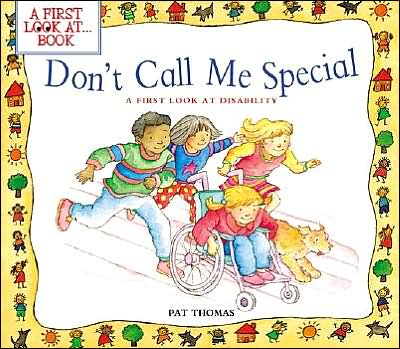
5 copies of "Don't Call Me Special", which I recently discovered at Barnes & Noble (one for each village I will visit): $42

Suitcase from Goodwill: $4.99

Haircut at nice salon near downtown participating in Locks of Love: $10 tip, $3 parking, $5 in gas

Copies of documents I will use for trainings and workshops: $10


Insurance


Travel medical insurance (from March 2-May 19 with $250 deductible and policy max at $1,000,000): $98.10

Traveler's insurance (for same period): $90.40

MedjetAssist Annual Membership (since I will be traveling overseas more than a few times in a year): $250
--> This is not an insurance plan. "As a member, if you are ever hospitalized 150 miles or more away from home, MedjetAssist will arrange for medical transfer to the hospital of your choice — at no additional charge. No transportation cost limitations. No pre-existing condition exclusions." <--


Fees

Village Volunteers fees (covering housing, water, 3 meals/day, in-country transport, escorts, logistics coordination, etc): $2,365

Ghana visa (Embassy cost $60 + processing service $59): $119

Kenya visa (paid at airport upon arrival): $50


Flights


Chicago to Nairobi via KLM Royal Dutch Airlines and Kenya Airways: $779.57

Nairobi to Accra via Ethiopian Airlines: $568

Accra to Chicago via Alitalia: $1134.70

Dear shower in my bathroom,

We're not breaking up; I just think we need to spend some time away from each other for a while. You are strong, hot and steamy. I'm going to miss you.

XOXO,
Linda

Saturday, March 26, 2011

Travel plans

Here's how it will work: I fly from Chicago to Amsterdam (4 hr layover) to Nairobi, arriving at 8:15pm March 30 via Kenya Airways.

March 31: take 8-10 hour bus ride to Oronkai village, transfer from bus to matatu (mini-van taxi) or be picked up by Emmanuel, local host

April 12: Go on to Dago village

April 20: Go on to Sister Freda's Foundation in Kitale

April 27: Return to Nairobi to catch a flight at 3:30am on April 28 via Ethiopian Airlines to Accra, Ghana

April 28: Arrive in Accra at 11:35am; work in Volta region

May 17: Return to Accra and depart at 11:45pm to Rome (3 hr layover) to Chicago by May 18 at 1:35pm.

Wednesday, March 23, 2011

Less hair = More water


I don't like having long hair in Africa. Besides it being uncomfortable in the hot weather, there is a very practical reason for preferring shorter hair while out there: to conserve time and resources.

Depending on the village, families might have rain collection tanks as their water source, or river water, or if they're lucky, they have a well. In most places, you use bucket of water and a cup for your "shower". In some places, you might be lucky to have running water and a stand-up shower like you're used to in the West.

I don't mean to discourage anyone from volunteering. It's just like going camping. In fact, you can also use camping shower bags that past volunteers have donated. You can bring one of your own, of course.

In the end, less hair means using less water and firewood or coals, and spending less time in the stall with uninvited flying guests. Also, the haircut, valued at over $50, was free because the salon was a partner with Locks of Love and I had 10" of untreated hair to donate.

Thursday, March 10, 2011

Workshop

As usual, I spent a long time preparing to present something that ended up being scrapped anyway! I meant to present for at least 45 minutes on visual aids for expressive/receptive language, but we miscommunicated about where we would meet for the session and started a full half hour late. However, we did end up doing a full 2 hours anyway, and I think it went well.

Having skipped that part of the lesson, we quickly reviewed that communication is based upon expressive/receptive language, then dove right into how to use their limited material/toys to target many areas of development at all levels of difficulty. This brought on many other areas that I didn't expect to talk about or teach, such as how to contain a child who cannot stay seated, pay attention, or even keep hands down. Celeste and I demonstrated how to position ourselves and one or more children who are wild, and how to use immediate reinforcement and praise. We also talked about using the toys and a token system to increase kids' ability to work. The teachers listened, observed, asked questions, and finally paired up to practice these techniques. Then each pair took it in turns to present to the class what they practiced and learned, and we reviewed what the teachers did well and discussed areas of improvement.

It was a great time for all; the information seemed to have been well-received and it was great to see them try out what we just talked about. Definitely a very rewarding day. Tomorrow I'll follow up and see if the teachers can incorporate the lessons immediately into real time situations where kids are pulling hairs and throwing toys, rather than the laugh fest we had with teachers only pretending.

It's been a great week overall. Even though we didn't really have exact plans for my visit, I think it worked well for me to have observed each class for part of the day each day, then taken that and turned it into some valuable lessons for the teachers. It wouldn't have been as respectful or productive if I had just dropped in and tried to push my agenda without having seen what they're up against, absorbed their culture a bit, or determined their current abilities.

I hope to never get tired of being a travel therapist. And I hope to be able to give others the same rewarding experience and knowledge exchange soon, with Therapists Without Borders. This is what it's all about.

Monday, March 7, 2011

Cusco 5-day summary

March 2 - Chicago to Mexico City. 11:20pm flight to Lima, Peru, was canceled. Stuck in Mexico for 24 hrs.

March 3 - Fun sightseeing Mexico City. Caught next 11:20pm flight to Lima.

March 4 - Lima into Cusco 9:15am. Very quick tour of Camino Nuevo's campus (but no school in session yet), quick lunch with Director of Manos Unidas, who suggested I take the next couple days to adjust to the high altitude, culture, language, and jetlag. So I napped till evening's dinner party with said Director and her friends.

March 5 - Walked around San Blas area of Cusco and took a "city tour" of 5 archeological sites.

March 6 - With Director & her friends to Pisaq's Carnival festival, during which children enjoy throwing water balloons, dumping buckets of water, and squirting water guns and spraying foam on people... Loved it!

March 7 - FINALLY spent the day meeting staff and students at Camino Nuevo! First day of school back from break; Came home more fulfilled and excited than 3 days of being a tourist. This will definitely be a primary destination for professional therapist volunteers. They are receptive to outside assistance, have a vast list of needs, and have plenty of work for any therapist. I still would love to get trained Spanish interpreters for therapists involved!!!!

Today I only spent assisting in 3 classrooms. In one class, the teacher was feeding a child with severe cerebral palsy when I came in. His head was rolled to the side and he was tied to a wooden upright chair so he wouldn't fall over. She reported that he doesn't chew and drools a lot. Boy am I glad (or, boy are they lucky) that I've got a dysphagia background. I taught the teacher how to support his head and body upright (since his wheelchair is too heavy to bring from home, apparently), use a smaller spoon with a soft tip, mash/puree all food, present only a half teaspoon amount, have him help hold the spoon and watch it approach his own mouth, and activate his lips to clear the bolus rather than bite on the spoon... And lo and behold, he chewed and swallowed and minimized drool almost to none, and feeding was a happy experience now he gets to participate. I also taught the teacher how to clean his mouth after each meal (which is extremely important since all his teeth looked like cavities, his gums were 100% inflamed as well as his cheeks... You betcha I said he HAS to be seen by a dentist ASAP), and how to give him drinks (using a sippy cup instead of from an open cup)

In another classroom with children with autism and down's syndrome, things were ... out of hand. Kids (about 6-7 years old) were putting blocks and toys in their mouths, one kid kept grabbing and pulling and trying to bite another kid's hair, another pulled his pants down to indicate he needed the toilet, another freaked out (tears, screaming, jumping, pulling others' hair and clothes) for no apparent reason and couldn't be calmed... There's a lot of work to be done... And finally I observed the afternoon class with the young adults, and helped a bit there too (though it was very calm in comparison hehe)

The plan now is that Tuesday I'll observe and help the rest of the classes.
Wednesday I'll actually go out into the rural villages to see how ThWB therapists can support families in the homes and communities.
Thursday afternoon I'll host a workshop for the teachers on communication and the many ways to use toys to teach different lessons (esp. regarding expressive/receptive language).
Friday I suppose I'll wrap things up in the classes, and in the evening I'll take a train up to Machu Picchu to spend the night.
Saturday Machu Picchu and then return in the evening.
Sunday all day outdoor rock climbing!
Monday fly back to Chicago via Lima and Mexico City again...
Tuesday finally arrive home.

I do have a lot of pictures, but as I am quite exhausted and slightly overwhelmed tonight, I'll post them another day. Buenas noches!

Sunday, March 6, 2011

Packing

When I volunteer overseas, I take 2 suitcases filled only of donations so that I can leave everything there and return with only my backpack of personal items. We haven't opened or distributed the suitcases for Manos Unidas yet, so I'll just summarize my personal packing list. Maybe it'll help you in your travels; it doesn't matter if I'm traveling for 2 weeks or 2 months. I don't take more than this. You can always wash clothes in the sink, launder them, or donate and buy. You can also purchase toiletries locally if you run out.

Here are my two things: backpack from REI and a personal bag (this time it's a slingback but the personal bag varies). I like having a backpack because I don't have to drag it over curbs and dirt roads and and it is convenient for all manner of vehicles (crowded bus, motorbike, shady taxi...).


In the carry-on (which fits under most airplane seats):


Toiletries

camp towel
<3oz>Sleeping
sleep sack (actually, sleeping bag liner. I haven't read anywhere that it prevents bedbug bites, but I prefer to think that I'm at least making it harder on them to get to me! also, it's the kind that can keep me cooler when it's hot out and warmer when it's cold out)
anti-allergenic pillow case cover (same reasons)

Clothing (I count clothes that I wear to the airport)
5-7 pairs of socks and underwear
pants for sleep
2-3 jeans/pants, including 1 outdoor pant that zips off into shorts
4-5 matching tops (mix and match all tops and pants!)
2 sweater-like layers + jacket if traveling to a chilly area
soft baseball cap
shower sandals

Electronics
universal plug
head lamp (in case I stay in a mud hut without electricity, or a hostel where others are sleeping)
SteriPen to disinfect unsanitary water for drinking or brushing teeth (in Africa it's rain or river water; in Latin America right now it's tap water)
chargers for: camera, cell phone, and netbook

Travel extras
book(s)
notepad/paperwork
snacks + multivitamins (in case the local diet is not nutritious enough)
tissue
neckrest collar for sleeping on the plane
2-3 spare ziplock and plastic bags (you'll always find a need for them)

In the personal bag:


netbook (I won't bring this to Africa)
eyedrops, chapstick, brush
wallet
ipod (rarely used)
sunglasses
tissue
hand sanitizer
passport + copies of travel health insurance and other docs in ziplock
small notebook + pen
cell phone (turned off; only used for emergencies)
camera
(gorillapod is missing in my house somewhere!)

[Note that depending on where you are, you wouldn't want to carry important items like your passport and netbook with you; OR you wouldn't want to leave them in the place you're staying unless there's a safe. You have to know your location and your activities.]

Wednesday, March 2, 2011

Tears of the Giraffe

We have a tendency to fall prey to apathy when some event does not affect us directly. How many Americans cared about the oil issue till gas prices inflated? Who mourned for the losses of 9/11 the longest, or continue to mourn to this day? Unless you or someone you know have been involved in a tragedy, it's just normal to not care... either after a while, or ever.

This is something I struggle with, and which compels me to keep working. Western Kenya is currently suffering from drought. Plants, animals, and now people are dying. They can't plant their next crop; it's too dry and dusty. Their rain collection tanks are empty now, and women and children have to walk to the river and carry the dirty water in jugs back to the village. Life is based on subsistence farming out there, and they are at the mercy of the seasons and weather. Seeing my friend Edwin, for the third time this week, write another plea on his FB status for people to help pray to God to send rain, made me cry.

I get this way sometimes, when I'm on my own and thinking about the people I've met and lived with, who struggle day by day to make it another day. And I re-imagine myself flying in there, getting a taste of life in another's shoes (if only they all had shoes), then flying back to the safety and comfort of the American Dream. And I start to feel like I'm carrying the weight of the world on my shoulders. Not just Kenya, but also Belize and Vietnam; you never ever forget when you make eye contact with sadness looking back at you with hope (remember I'm the foreigner they see as healthy and wealthy coming to bring them solutions). And then when the senseless violence began in Libya, even though I've never been there or know anyone there, I immediately sympathize with them because when life gets tough, it's tough no matter where you are, and I hurt for them.

Shana, the wise director of Village Volunteers and my role model, warned me about this earlier, about caring for everyone I visit, and will be tempted to spread myself too thin by wanting to help every project, thereby not being of help to anyone. This is another reason we've postponed India.

So as I visit these new villages and programs for the sake of Therapists Without Borders, my remedy to the pain I feel for the oppressed poor and neglected, I must guard my heart. But when I say "guard," I don't mean avoid feelings toward them; I mean shield it with the knowledge that I'm there to try to make a difference. Not to feel sorry for them. With that last thought, I must finally turn off my iPhone and be on my way to Cusco.